
What is the difference between organic and regenerative organic farming?
Organic farming removes synthetic pesticides and fertilizers from the equation. That keeps harmful chemicals out of the soil and out of your food, and it is the part most people already know.
Regenerative organic farming asks a different question: does this farm leave the land better than it found it? Instead of only avoiding harm, it works to rebuild soil health, biodiversity, and carbon storage over time. Traditional methods can deplete soil nutrients season after season. Regenerative practices aim to raise soil fertility instead (Rainforest Alliance, 2024).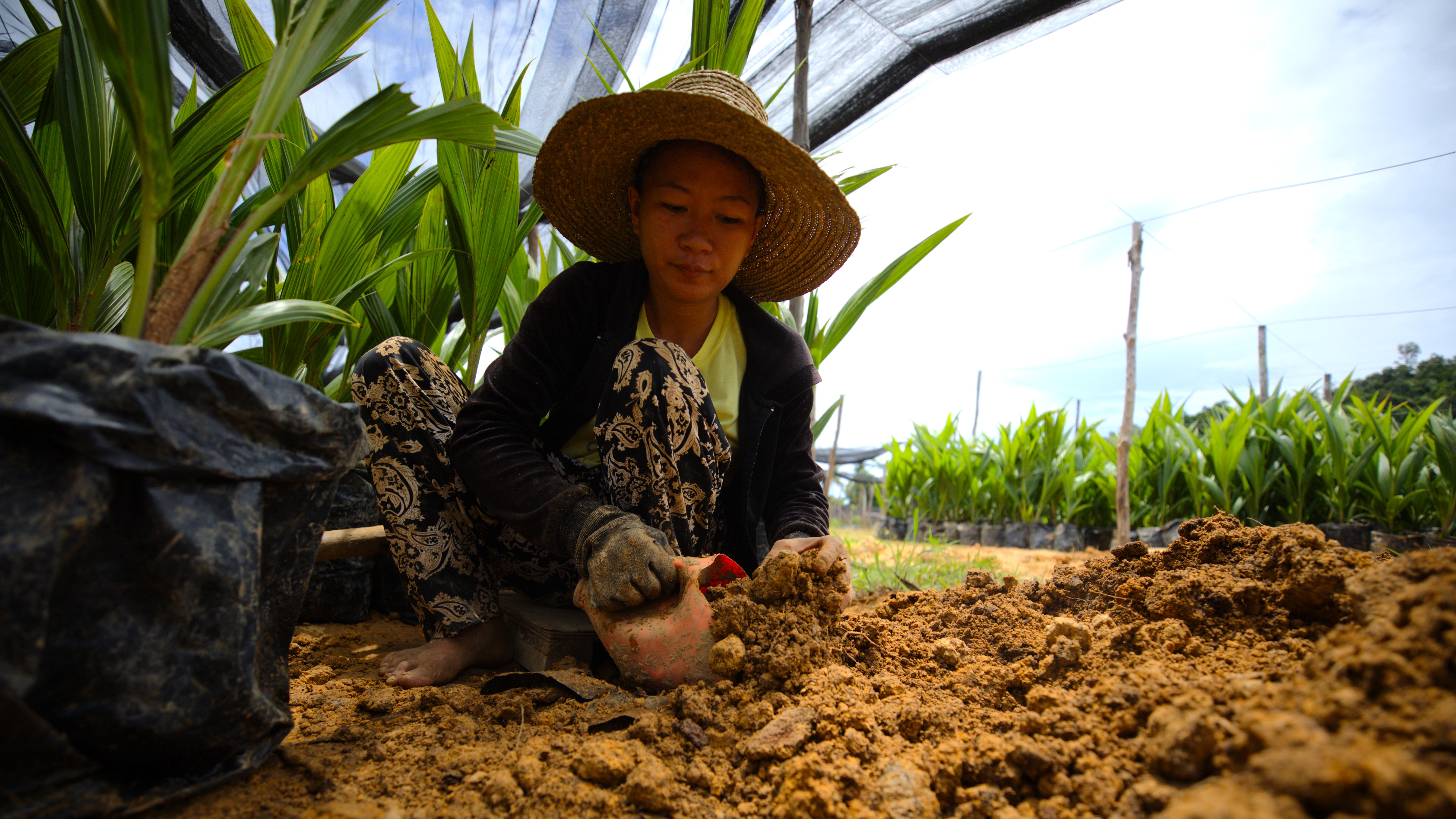
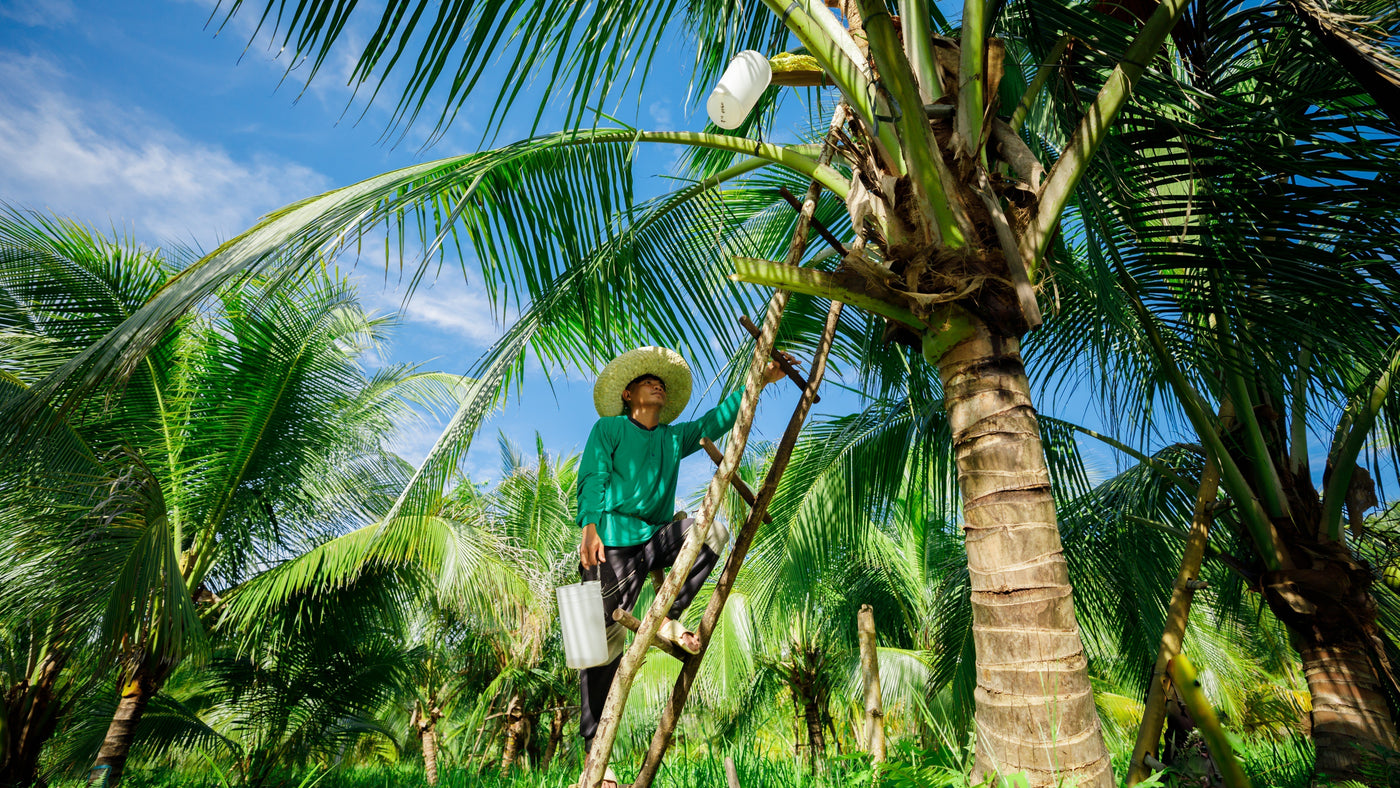
At Lionheart Farms, that question shapes the work across a 3,500+ hectare hybrid coconut plantation in the Barangays of Ransang, Candawaga, and Culasian in Rizal, Southern Palawan, operated under a Joint Venture Agreement with the Department of Environment and Natural Resources (DENR). The plantation is led by CEO and Co-Founder Christian Eyde Moeller.
The link to the final product is direct. Healthier palms produce healthier coconut flower sap. A palm grown in living soil gets balanced nutrition and stays resilient through the seasons, and the ecosystem around it rebuilds alongside.
What does regenerative farming look like on a Lionheart coconut farm?
Picture the soil around a coconut palm. Regenerative practices feed that soil instead of draining it, and most of the work happens at ground level.
How is the soil fed?
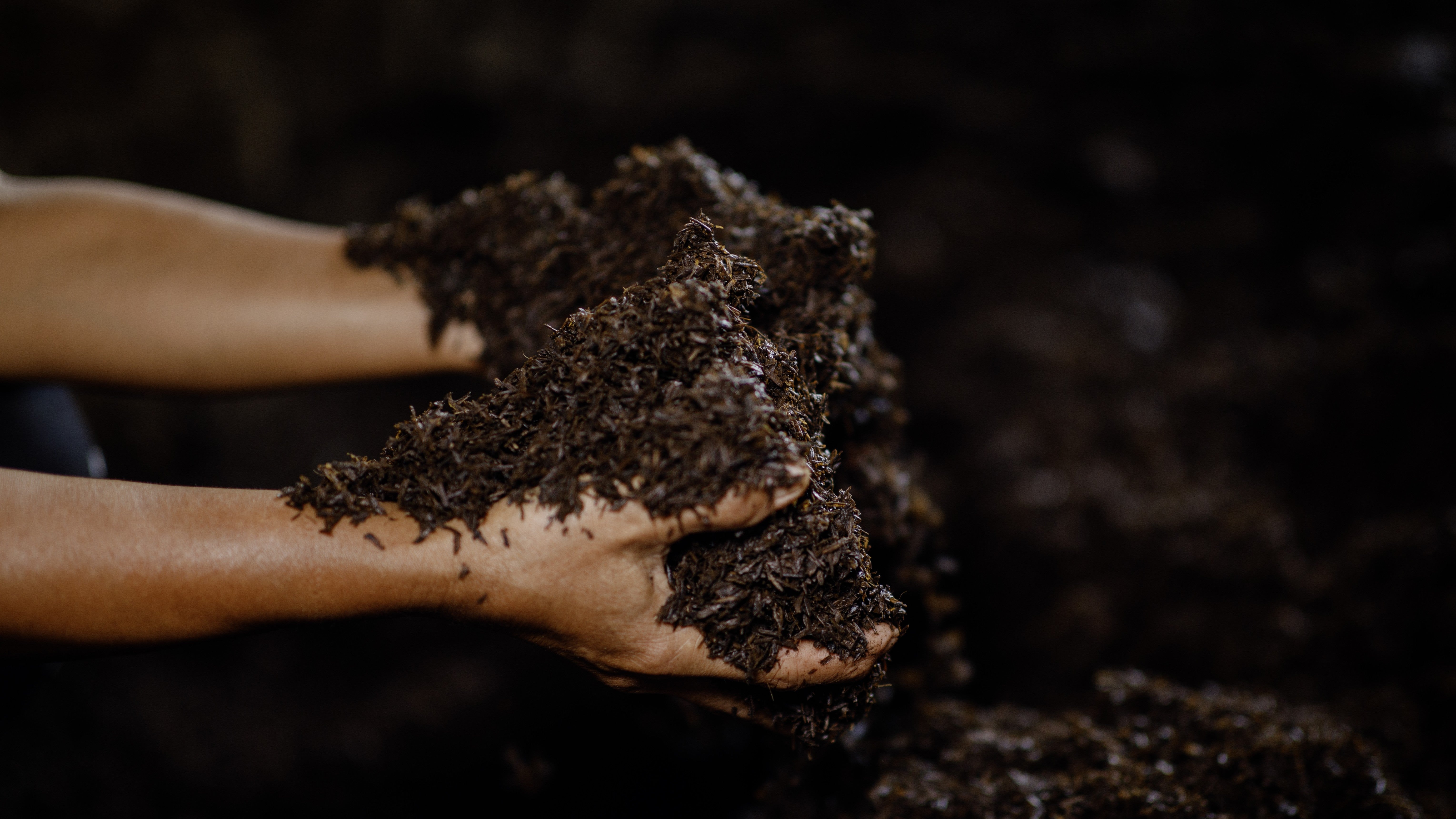
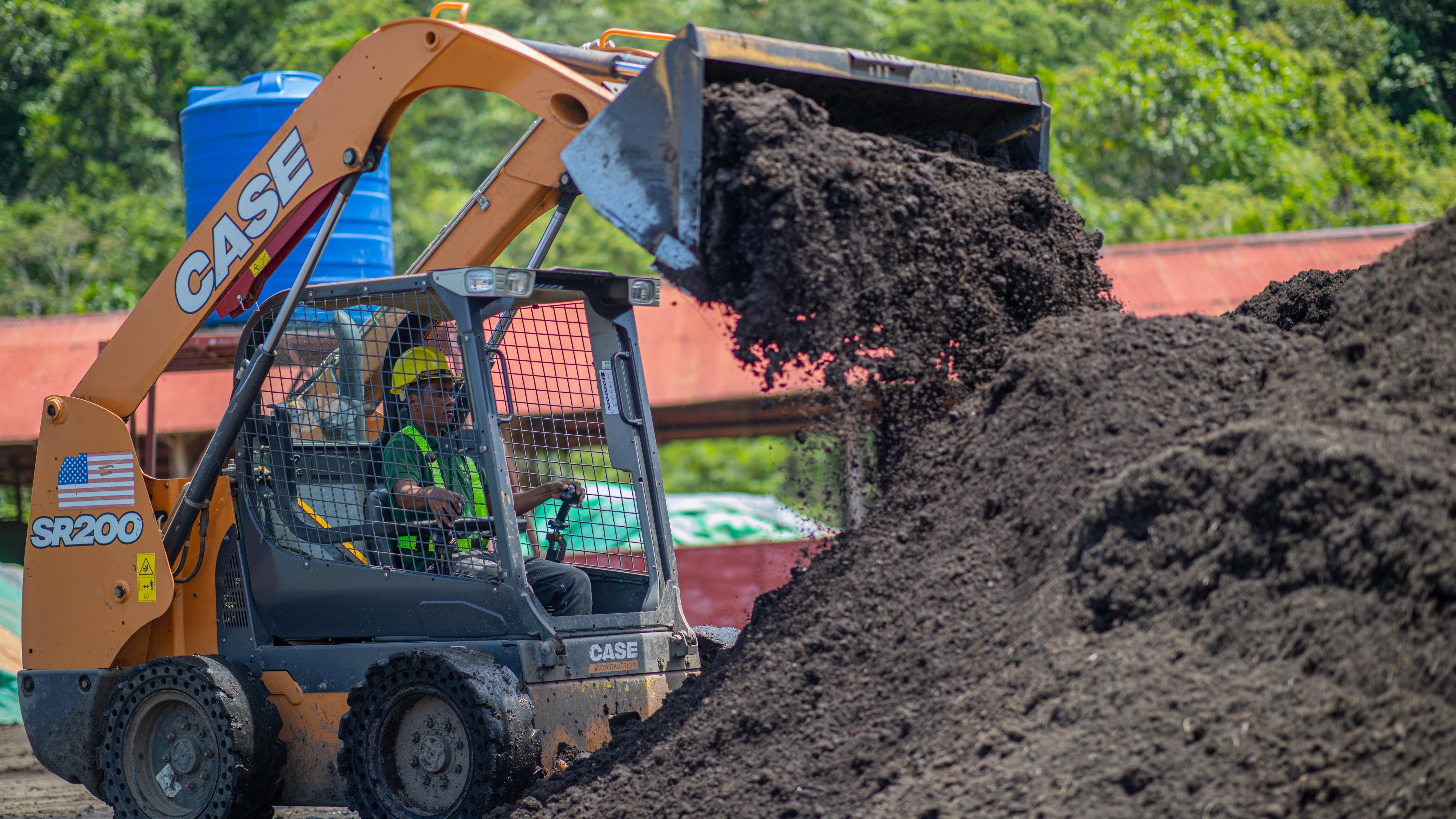
- Bio-organic fertilizer made on-site. Manure, rice hulls, molasses, and other locally sourced biomaterials are blended into fertilizer that returns nutrients to the soil and cuts waste.
- Organic foliar fertilizer. It strengthens the palms without synthetic chemicals.
- A steady schedule. Rather than leaving soil to recover on its own, the plantation applies liquid foliar fertilizer monthly and granular bio-organic fertilizer quarterly, with active soil monitoring.
How is the soil protected?
- Cover crops between the palms. Species such as Calopogonium mucunoides and Pueraria montana (kudzu) are propagated on-site. They fix nitrogen, protect against erosion, and keep roots active beneath the surface.
- Hand weeding. Round weeding and slashing are done by hand to manage growth without herbicides.
- Patchwork planting with forest trees. Strategically placed trees add protection against harsh weather and support biodiversity.
- Riverbank stabilization. Active management of riverbanks limits erosion and helps keep water systems clean.
None of this happens overnight. A palm does not turn "regenerative" the day someone stops using synthetic sprays. The soil rebuilds over seasons. Insects return, microbes multiply, and other plants take root, so the whole ecosystem recovers alongside the palm.
See it in practice: read how cover cropping supports sustainable agriculture, or explore Lionheart's sustainability approach.
How much carbon does a regenerative coconut farm capture?
As the ecosystem recovers, it also stores more carbon. This is where a specific number matters more than a nice-sounding claim.
In 2024, the coconut palms, forest trees, and bamboo planted across Lionheart Farms sequestered close to 189,000 metric tons of CO₂, based on the company's own species-level accounting by planting year and age.
Coconut palms account for over 99 percent of that total. Native forest species such as Intsia bijuga (Ipil) and bamboo contribute the rest. The figure will keep climbing as palms planted since 2016 reach full maturity and as ongoing reforestation adds new forest cover to the Joint Venture Agreement area.
How does healthier soil help palms handle extreme weather?
Healthy soil gives the land more room to absorb a bad season. Cover crops improve fertility and water retention and keep topsoil from washing away, while patchwork planting and well-placed forest trees soften the effect of harsh weather. Together they help the plantation stay productive as droughts and heavy rains become harder to predict.
A palm grown this way produces more than sap. It leaves behind a healthier patch of earth every year it stands. Across an entire plantation, that adds up to:
- Soil that pulls carbon out of the air
- Water systems that stay clean
- Land that keeps producing for the next generation instead of wearing out
Organic protects what is already there. Regenerative restores what the land has lost, so every season leaves the farm stronger than the last.
Why does regenerative organic farming need to include the farmer's economics?
Healthy soil is only half the story. The other half is whether the people tending the palms can make a living from them. Farmers need clear standards, reliable processing, quality control, and market access that reward responsible practices.
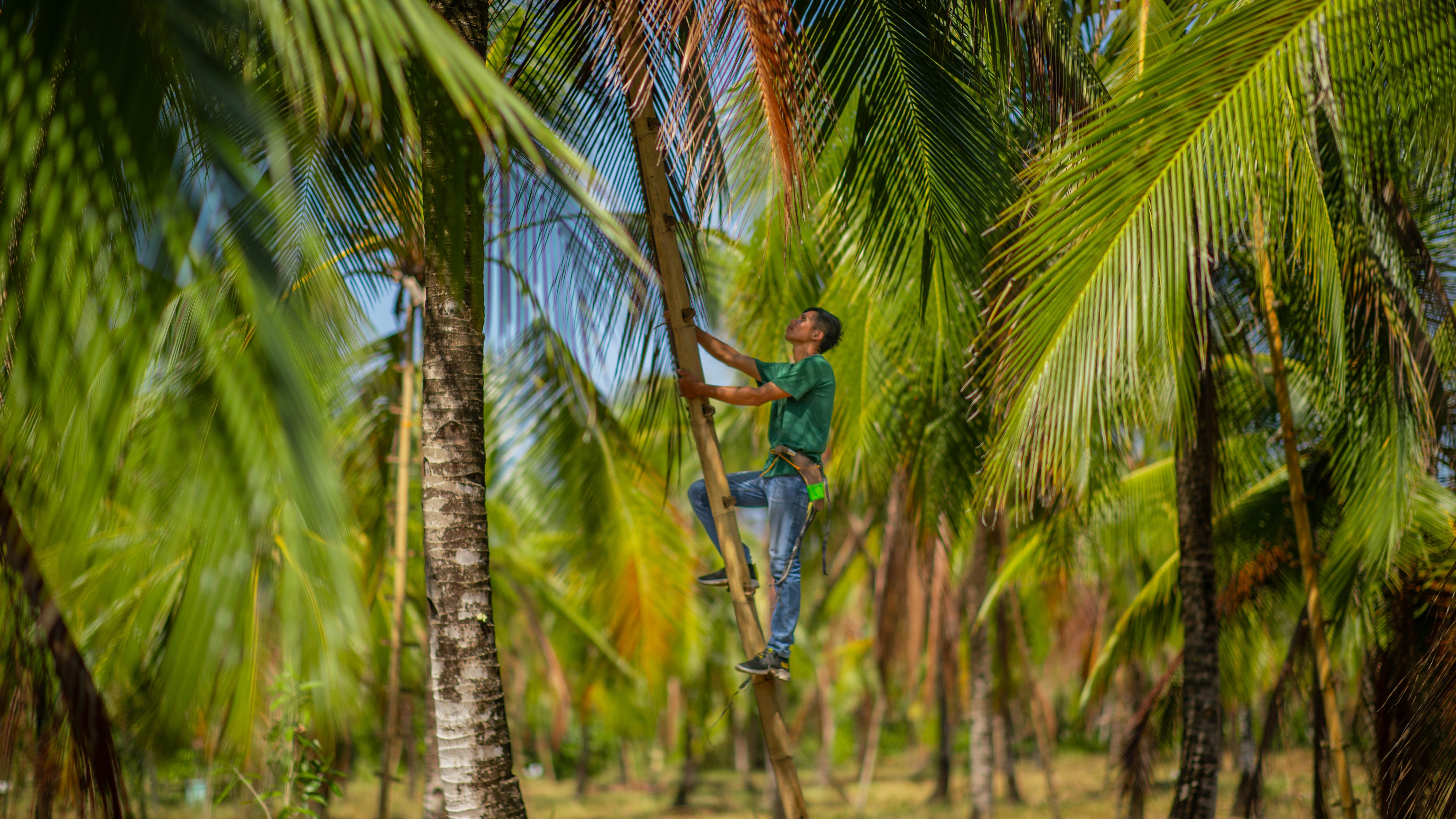
Lionheart Farms builds that system through its Hybrid Nucleus Estate Model. It connects more than 3,500 hectares of farmland and over 5,000 farming families, linking smallholder growers to training, technology, and markets. Lionheart Academy supports the knowledge side, with weekly Learning Saturdays that teach farmers sustainable practices using Korean Natural Farming methods. Every harvest then moves through a managed system designed to hold quality from farm to market, which reduces waste and creates long-term value for both people and land. You can read more in how Lionheart drives community-based economic growth in Palawan.
What did Christian Eyde Moeller say about the operating model?
Speaking at Far Eastern University on April 28, 2026, Christian Eyde Moeller, CEO and Co-Founder of Lionheart Farms, put the issue this way:
"The farmer is not the constraint, but the operating model is."
At ANUGA 2025 in Cologne, the world's largest food trade fair, he took the stage on October 6, 2025, with a talk titled "Connecting Organic Farmers and Regenerative Communities to the World." His opening line framed the gap:
"Most organic farming stops at the product. We start with the people."
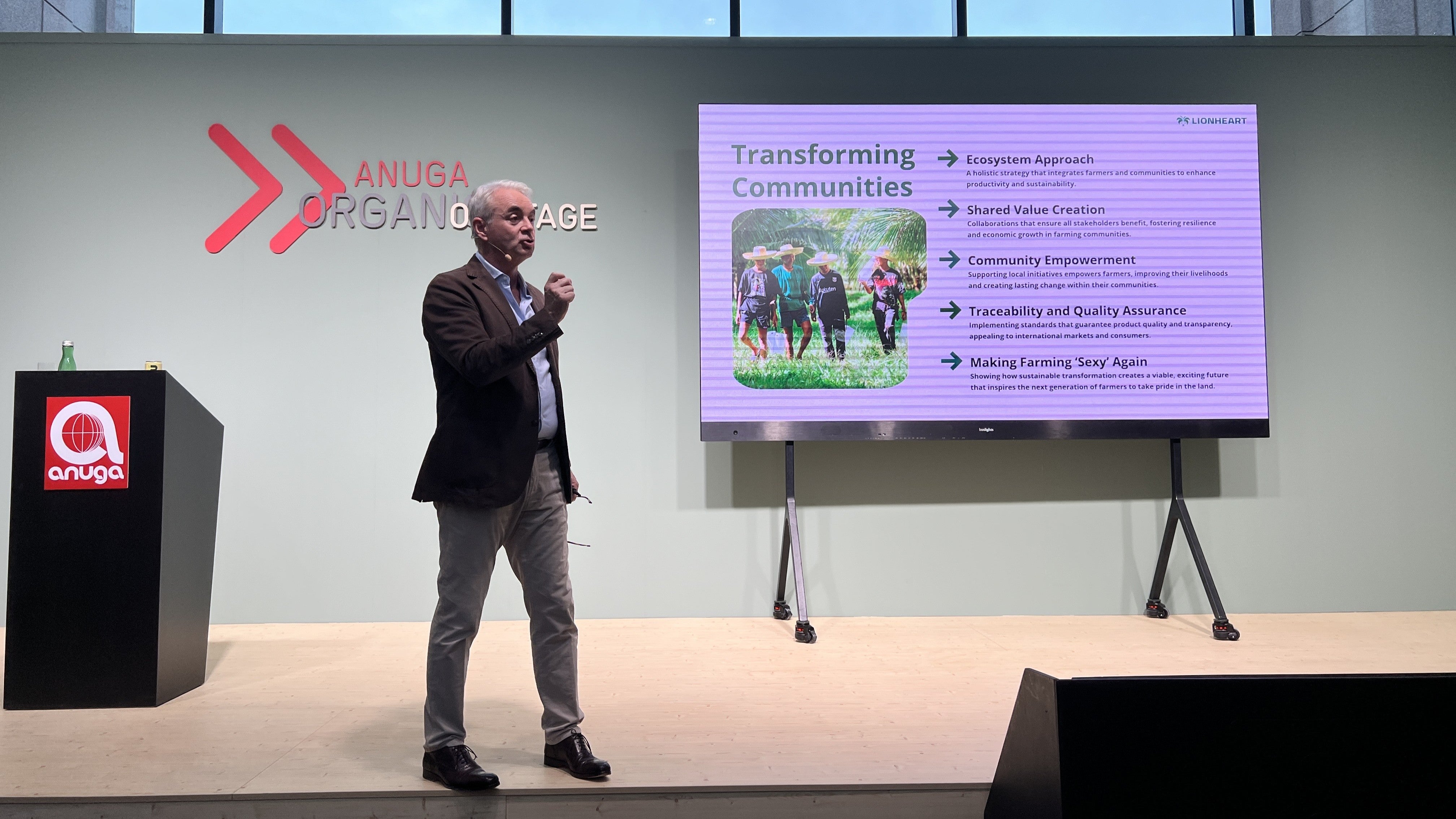
The talk described a problem that certification alone does not solve. Small coconut farmers in the Philippines grow premium, export-quality products, yet many stay trapped in cycles of poverty because of how the supply chain is structured, not because of the crop or the practices. Small farmers typically receive only a fraction of the final retail value, and layers of middlemen can take the largest share. Moeller framed this as an industry-wide structural challenge rather than a failure of any one farmer or region.
The partnership model he described addresses the gap directly:
- Direct relationships between farmers and buyers, removing unnecessary layers between harvest and market
- Technical support and training delivered alongside, not instead of, stable pricing
- Real stories, names, and numbers from Lionheart's own farming communities in Palawan
- A traceability system that gives international buyers consistent quality and an authentic, verifiable sustainability story
How do the layers fit together?
|
Layer |
The question it answers |
What it covers at Lionheart Farms |
|---|---|---|
|
Organic practice |
Are harmful inputs kept out? |
No synthetic pesticides or fertilizers |
|
Regenerative practice |
Is the land getting better? |
Cover crops, bio-organic fertilizer, hand weeding, reforestation |
|
Operating model |
Can farmers earn a living and can buyers trust the story? |
Hybrid Nucleus Estate Model, training, direct farmer-buyer relationships, traceability |
The talk closed on a point that ties back to the soil: this only works if it scales beyond one farm. Moeller's vision extends the direct-partnership model to other crops and regions, built on the idea that farmers, communities, buyers, and consumers all have a stake in the same outcome, a supply chain that regenerates value instead of extracting it.
What comes out of all this? From palm to product
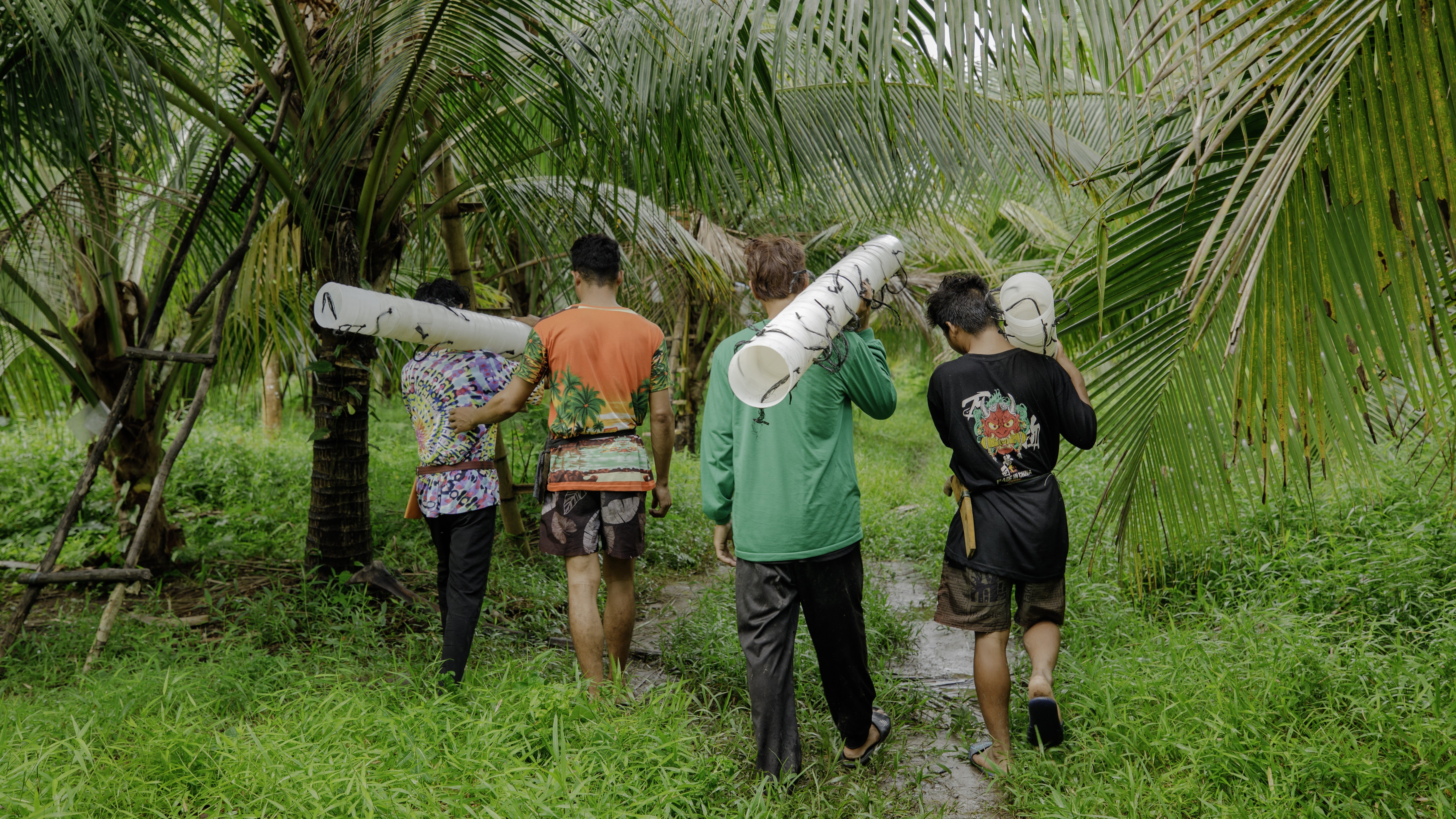
Lionheart does not produce coconuts or coconut by-products such as oil or copra. It taps the coconut flower and makes every product from one raw material, coconut flower sap. That makes the link between field and product easy to trace: healthier soil, healthier palms, better sap.
The sap is the base of the CÓCOES line, which includes coconut flower sap syrup, coconut aminos, and coconut flower vinegar. It is also the base of The Power of SLOW, a range of coconut flower sap drinks. Meet the full range on the Lionheart brands page.
What is next for regenerative farming at Lionheart?
Regenerative farming is not a single practice or a certification. It is a way of thinking about the relationship between the land, the trees, and the people who care for them. It is also still a work in progress. Lionheart Farms does not claim to have it all figured out yet. The soil is still rebuilding, season by season.
What comes next is steady rather than dramatic: more of the palms planted since 2016 reaching maturity, reforestation adding forest cover, and, in Moeller's vision, the direct-partnership model reaching other crops and regions. For the wider picture, see how Lionheart is leading sustainable agriculture in ASEAN.
Source regenerative organic coconut flower sap products from Palawan
Building a product line on traceable, regenerative organic sap? Talk to the Lionheart team about bulk supply, private label, and product development.
- Traceable from farm to finished product
- Every product is made from one raw material: coconut flower sap
- Grown on a regenerative organic plantation in Rizal, Southern Palawan